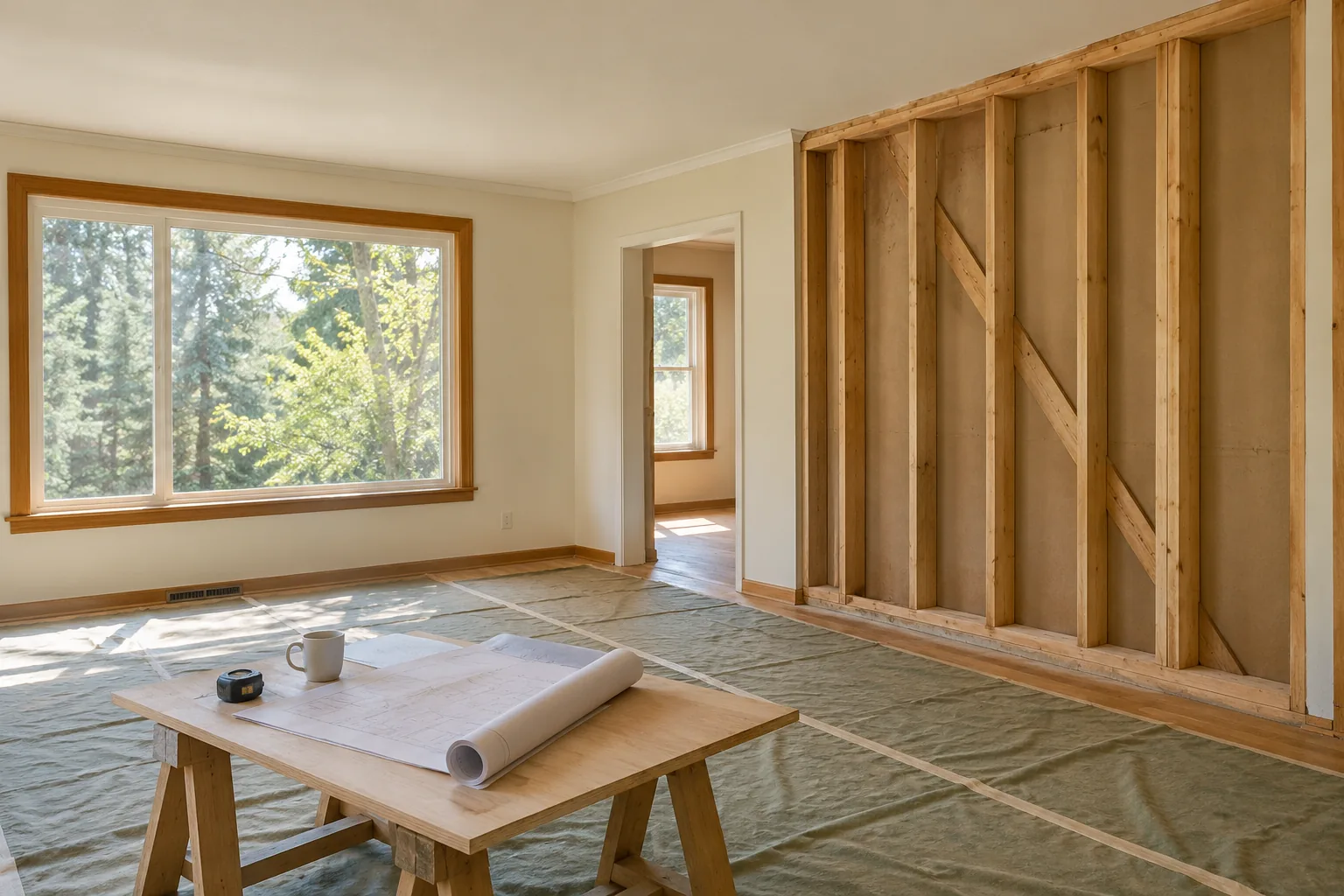
The useful starting point
Plan an aluminum-to-copper rewiring project around the assessed scope, access openings, occupancy, finish restoration and completion records.
A schedule follows the assessed scope
There is no useful universal number of days for rewiring an aluminum-wired home. Floor area alone does not describe circuit routes, accessible spaces, finishes, occupancy or the condition discovered. Ask the contractor to provide a schedule for the agreed scope, with assumptions and dependencies attached.
Separate planning and assessment, any required approvals, electrical work, inspection milestones and finish restoration. A quote for electrical work may exclude plaster, drywall, paint, cabinetry or clean-up by another trade. Those exclusions can change the date on which the home is practically ready to use.
Define what “rewiring” means in this quote
Ask for the circuits and areas to be replaced and for an explicit retained-wiring list. Replacing selected circuits or an open kitchen is different from replacing every targeted aluminum branch circuit. Service and feeder conductors are a separate scope unless expressly included.
The contractor should explain how old conductors are handled under the applicable local requirements and how the circuit record will be updated. Keep that explanation at the project level. This guide does not provide a route design, demolition instruction or electrical installation procedure.
Build a sequence with clear handoffs
| Stage | Question to settle before the stage |
|---|---|
| Assessment and scope | Which circuits, locations and limitations are documented? |
| Access plan | Which surfaces open, who authorizes them and who restores them? |
| Occupied-home coordination | What access windows, equipment dependencies and shutdown arrangements are needed? |
| Electrical installation | What discovered conditions require a written change authorization? |
| Approval and handover | Who arranges required inspections and supplies the records? |
| Finish restoration | Which contractor completes patching, decoration and clean-up, and when? |
Give the contractor the practical constraints
Tell the project team if people work from home, tenants need notice, rooms must remain accessible or equipment is medically important. Let the responsible professionals establish safe arrangements. Do not assume an extension cord, generator or neighbouring circuit is an acceptable temporary plan.
Discuss furniture, stored belongings, pets and access to attics or service spaces before work begins. Ask which preparation the owner should perform and which areas must remain untouched. Never open electrical equipment to make the contractor’s visit faster.
Agree on how unknown conditions become decisions
Ask the quote to distinguish fixed work, allowances and work excluded pending assessment. Require a clear process for describing an unexpected condition, its effect on price and schedule, and who authorizes the change. Preserve photographs and findings supplied by the professional with the change record.
If the project is staged, maintain a map of replaced and retained circuits after every stage. Do not describe the entire property as rewired while a known retained scope remains. The quote comparison guide helps keep bids aligned.
Close the project with a useful property record
Collect the final scope, circuit identification, relevant equipment documents and actual approval records. Keep any remaining limitations and future stages visible. Ask the insurer or other recipient to respond to the documents if the project was intended to meet its requirement.
A beautiful repaired wall does not document what changed behind it. Use the wiring record guide and scope planner to retain both the electrical and restoration boundaries. Send Hause the location, access context and planned timing when requesting a professional review.
Questions / Direct answers
Common questions
Can I get a fixed nationwide rewiring duration?
Does a rewiring quote include painting?
Can the work be staged?
References / Jurisdiction matters
Sources & further reading
Confirm the actual location, permit authority and equipment instructions before relying on a requirement. A source from another jurisdiction is identified for context.
- U.S. CPSC Repairing Aluminum Wiring, June 2011U.S. Consumer Product Safety Commission · 2026-10-13
- Aluminum wiring: Ontario homeowner guidanceElectrical Safety Authority (Ontario) · 2026-10-13
Do not open electrical equipment or work on energized systems. Permits, qualified trades and inspection requirements vary by location. This guide does not design an installation or certify existing equipment.